
Windows 10 to Windows 11 upgrade - what to check before updating?
Learn what to check before upgrading from Windows 10 to Windows 11: compatibility, backup, drivers, TPM, Secure Boot and common update problems.
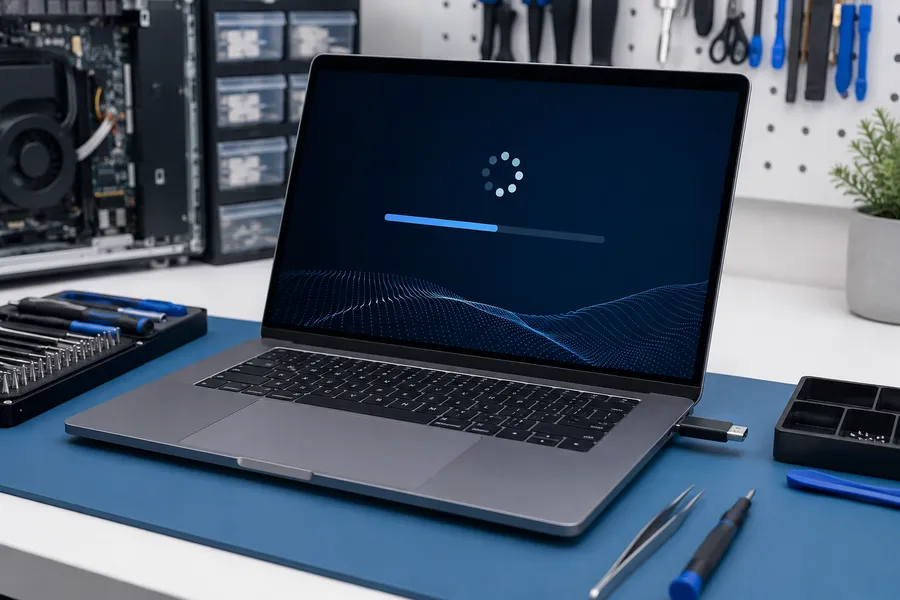
Is upgrading from Windows 10 to Windows 11 worth it?
On modern hardware the upgrade is usually a sensible step. Windows 11 brings security improvements, a tidied-up interface and better support for current processors. If your machine is reasonably recent, meets the requirements and works well on Windows 10, the transition tends to be smooth.
On older hardware you should be more careful. If the computer already runs slowly on Windows 10, has a spinning hard drive, limited RAM or driver issues, upgrading alone is unlikely to fix those problems.
What to check before upgrading
- processor compatibility with Windows 11,
- TPM 2.0 support,
- Secure Boot,
- available RAM (8 GB recommended),
- disk condition,
- free disk space (at least 64 GB),
- driver compatibility for your hardware,
- a backup of your important data.
TPM 2.0 and Secure Boot in simple terms
TPM (Trusted Platform Module) is a small security chip that Windows 11 requires. Most computers made after 2016 have it, but it may need to be enabled in BIOS/UEFI settings. Secure Boot is a firmware feature that prevents unauthorized software from loading during startup - Windows 11 requires it to be active.
If you are unsure whether your machine supports these features, you can check using the PC Health Check tool from Microsoft or ask a technician before proceeding.
In-place upgrade vs clean install
An in-place upgrade keeps your programs, data and most settings, but it can also carry over problems from the old system. If Windows 10 is cluttered, slow to start, unstable or has accumulated errors over the years, a clean install of Windows 11 will give a better result.
On older machines, replacing the hard drive with an SSD before installing a fresh copy of Windows often makes a bigger difference than the Windows version itself.
Related services:
- Windows installation Warsaw
- SSD replacement Warsaw
Back up your data first
Before any major system change, back up your documents, photos, project files, browser profiles and anything else you cannot easily recreate. Upgrades usually preserve your data, but if the disk has errors or the process is interrupted, the risk of data loss increases.
When it is better to ask for help
- the computer holds important data you cannot afford to lose,
- the system is already unstable or throwing errors,
- the disk makes unusual sounds or has reported bad sectors,
- a previous upgrade attempt failed,
- you are unsure whether your hardware meets the Windows 11 requirements,
- you need a clean install and full configuration from scratch.
Related services
FAQ
No. Windows 11 has specific hardware requirements including a compatible processor, TPM 2.0 and Secure Boot. Some older machines are not officially supported.
A standard in-place upgrade should keep your files and installed programs, but backing up before any major system change is strongly recommended.
If the current system is cluttered, slow or unstable, a clean install usually produces a better result. It takes more time to set up but starts fresh without old problems.
Need a free diagnostics check?
Initial diagnostics and cost estimates at MAdKuM are completely free. Briefly describe the problem, provide the device model, and book an appointment.