
How to enter BIOS or UEFI and what can you change there?
Simple explanation of BIOS and UEFI settings: boot order, Secure Boot, virtualization, hardware detection and when not to change settings blindly.
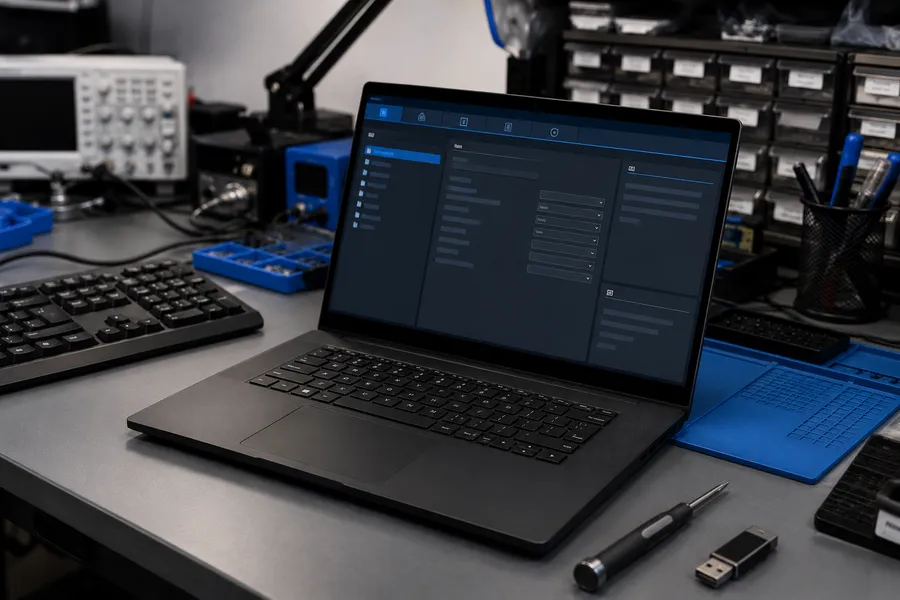
What is BIOS or UEFI?
BIOS (Basic Input/Output System) and UEFI (Unified Extensible Firmware Interface) are the firmware that runs before the operating system loads. They initialize the hardware, check that everything is connected properly and then hand control over to Windows or whichever OS you have installed.
Modern computers use UEFI, but many people still call it BIOS. The practical difference for most users is that UEFI has a graphical interface and supports larger drives, while traditional BIOS was text-only.
How to enter BIOS or UEFI
You need to press a specific key immediately after pressing the power button, before Windows starts loading. The key depends on the manufacturer:
- Dell - F2 or F12,
- Lenovo - F2, F1, Enter or the Novo button,
- HP - Esc, F10 or F9,
- ASUS - F2 or Del,
- Acer - F2 or Del,
- MSI - Del,
- Gigabyte - Del or F12.
If you miss the window, just restart and try again. On fast SSDs it can take less than a second, so press the key repeatedly right after powering on.
Entering UEFI from within Windows
- Open Settings.
- Go to System.
- Open Recovery.
- Select Advanced startup.
- After restart, choose Troubleshoot.
- Open Advanced options.
- Select UEFI Firmware Settings.
What you can change in BIOS/UEFI
- boot order (which device to boot from first),
- Secure Boot on or off,
- TPM settings,
- disk mode (AHCI vs RAID),
- drive detection,
- memory settings,
- date and time,
- virtualization (VT-x / AMD-V),
- fan profiles on some boards,
- BIOS/UEFI firmware update on selected models.
What to avoid changing without knowing why
Changing the wrong setting can prevent Windows from loading, make the drive invisible to the system or alter security features in a way that causes further problems. Before making changes, note what you are about to change so you can revert it.
BIOS updates deserve special caution. A failed update caused by a power cut or an incorrect file can leave the board unbootable. In some cases the firmware chip needs to be reprogrammed with a hardware programmer. Read more: Computer service Warsaw.
When a BIOS reset or update might help
- the system no longer recognizes a drive after a configuration change,
- Windows fails to boot after Secure Boot or disk mode was changed,
- a BIOS update specifically addresses a hardware compatibility or stability issue you are experiencing,
- the manufacturer recommends an update for your model.
Related services
FAQ
Simply looking at settings is fine. Changing the disk mode, Secure Boot, TPM or boot order can affect how the system starts, so only change what you understand and note what you changed.
Try entering BIOS again and reverting the setting you changed, or load the default settings option. If the screen stays blank or the machine does not respond at all, diagnostics may be needed.
Not always. Update the firmware only when it fixes a specific problem you have or when the manufacturer recommends it for your model. Do not update just because a newer version exists.
Need a free diagnostics check?
Initial diagnostics and cost estimates at MAdKuM are completely free. Briefly describe the problem, provide the device model, and book an appointment.